Pre-operative examination
A pre-operative exam is required if your pet has not been examined by us within the past six months. We need to listen to the heart and lungs, review current medications, and make sure nothing has changed before anesthesia.
Full-mouth dental X-rays, careful cleaning, probing, and treatment based on what is actually happening below the gumline.
These requirements apply before spays, neuters, dental procedures, mass removals, and anything else involving anesthesia.
A pre-operative exam is required if your pet has not been examined by us within the past six months. We need to listen to the heart and lungs, review current medications, and make sure nothing has changed before anesthesia.
We recommend bloodwork before every anesthetic procedure. Pre-anesthetic bloodwork is required for pets over 6 years old. It can uncover anemia, infection, or liver and kidney changes that are invisible on an examination. Results may change the anesthesia plan—or tell us today is not the safest day to proceed.
Finding the toothache your pet cannot tell you about—not simply making the visible part of the teeth prettier.
That does not mean the mouth is comfortable.
Dogs and cats are incredibly stoic about dental pain. Look, does Fluffy cry out when you look at her wrong? Yes. Will she keep eating with her teeth rotting out of her head? Also yes.
Families often realize how much a pet was hiding only after the painful teeth are treated.
Nope! Healthy teeth are firmly attached and significantly harder and more time-consuming to remove. I am far too lazy to spend time taking out things that are perfectly healthy.
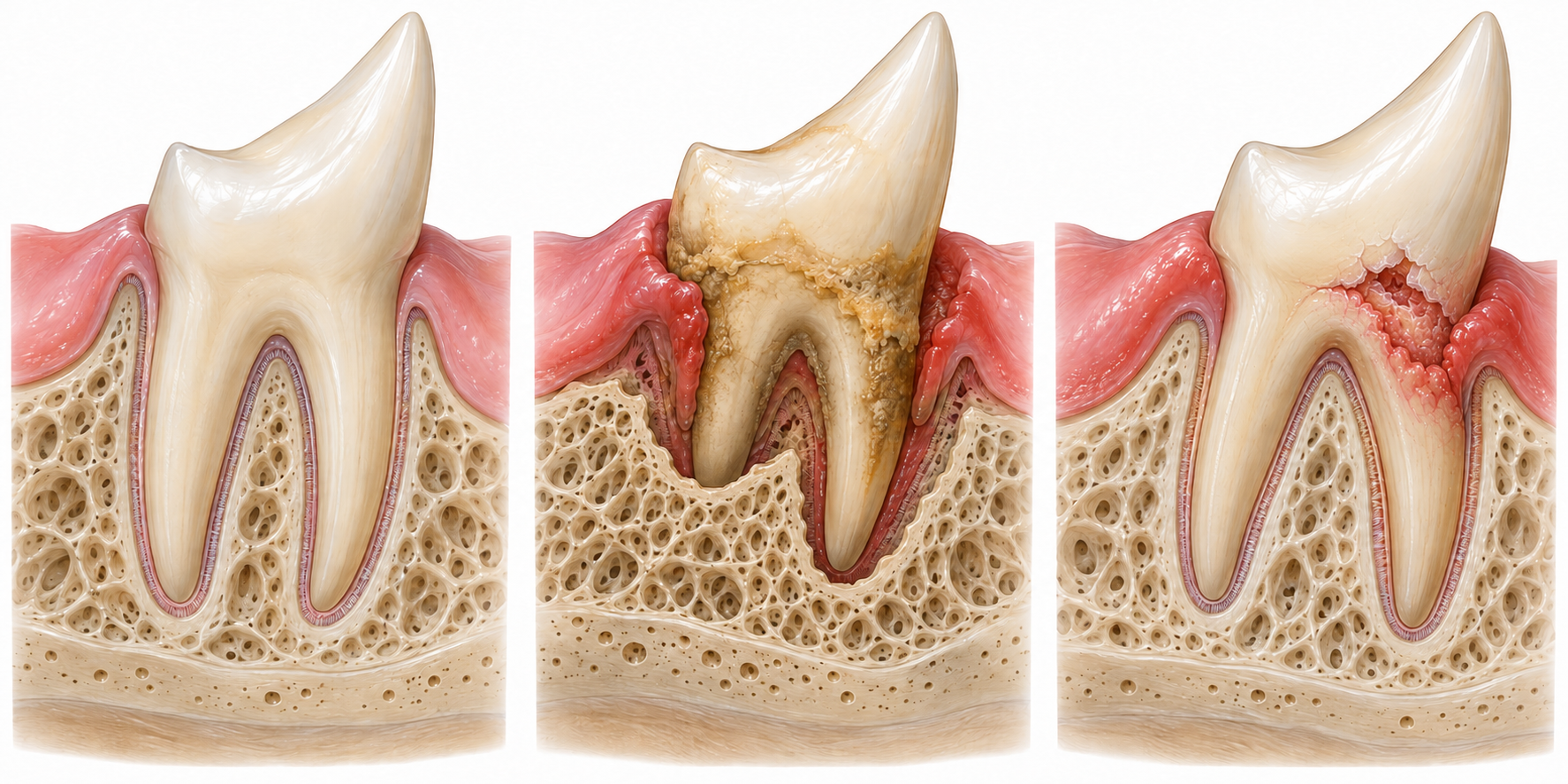
Healthy teeth are harder and more time-consuming to remove because those roots are doing exactly what they should: holding on tight. Nope, we do not pull them.
Bacteria and inflammation travel below the gumline and destroy the bone holding the tooth in place. Less bone means a loose, painful tooth. Ewww.
The cat’s body begins dissolving the tooth structure, often below the gumline. You may not see it—but your cat can absolutely feel it. Ouchie!
Extractions and medications related to extractions are additional. We follow the authorization plan discussed with you.
Much of the tooth and nearly all of its supporting bone live below the gumline. Probing finds abnormal pockets around the teeth; full-mouth X-rays show bone loss, broken roots, abscesses, and feline resorptive lesions that cannot be diagnosed by making the visible crowns shiny.
No food after midnight. Water is fine. No breakfast. Yes, “no breakfast” is redundant, but some people don’t get it.
Currently taking medication? Let us know. Most long-term medications are okay to give before anesthesia, but ask us ahead of time if you are unsure.
We confirm contact information, medications, your estimate, and your extraction authorization plan.
We examine and probe every tooth, take full-mouth X-rays, clean and polish the teeth, and decide which teeth are painful or diseased. You may authorize us to remove necessary teeth within the estimate, or ask us to call during the procedure to discuss them before proceeding.
We text when the procedure is finished and your bestie is waking up.
Once your pet has passed their field sobriety test, we call to arrange pickup and make sure someone is available to review discharge instructions.
Your pet may be groggy, whiny, clingy, restless, or generally weird and wonky that evening. They may not be super interested in dinner because… anesthesia. That should steadily improve as the anesthesia wears off.
Your pet will eat softened food while the extraction sites heal. A slight blood tinge in the water bowl can be normal after extractions. There are no sutures that need to be removed.
We send home an oral rinse for the gums to support healing and reduce bacteria while brushing is temporarily off the homework list.
Yes—once everything is healed. They were eating kibble with the bad teeth, and I assure you they were not crushing it with those angry teeth. We will tell you how long to soften the food based on what was extracted.
Brushing is the gold-standard homework, but it takes training and cooperation. Start slowly and use pet toothpaste—human toothpaste is not for pets.
If brushing is not happening, choose products with evidence behind them rather than believing whatever the package promises.