♡
Routine wellness exams
A physical exam lets us notice changes, talk about what you are seeing at home, and make recommendations for the pet in front of us—not some theoretical average pet.
These are our usual recommendations for keeping dogs and cats healthy and catching problems while they are still easier—and often less expensive—to manage. We will still look at the actual pet in front of us, because medicine works better that way.
Vaccines matter. So do the exam and testing that can find disease while your pet still looks perfectly fine.
A physical exam lets us notice changes, talk about what you are seeing at home, and make recommendations for the pet in front of us—not some theoretical average pet.
Intestinal parasites are not always visible, and pets do not need to look sick to have them. Testing tells us what an exam cannot.
Because pets cannot tell us when their kidneys, liver, or other organs are starting to struggle. Bloodwork can catch changes before your pet acts sick.
We recommend Bordetella for all puppies. Puppies need classes and socialization, which means exposure to other dogs, and they can become more seriously ill from respiratory disease.
We recommend Lyme vaccination for dogs who get ticks. Vaccination plus consistent tick prevention is our favorite one-two punch.
After the kitten series, we continue FeLV vaccination for cats who go outdoors or otherwise have ongoing exposure risk.
Indoor cats still need rabies and distemper vaccines. Doors open, bats get into houses—even new houses—and cats occasionally make choices their families did not approve in advance.
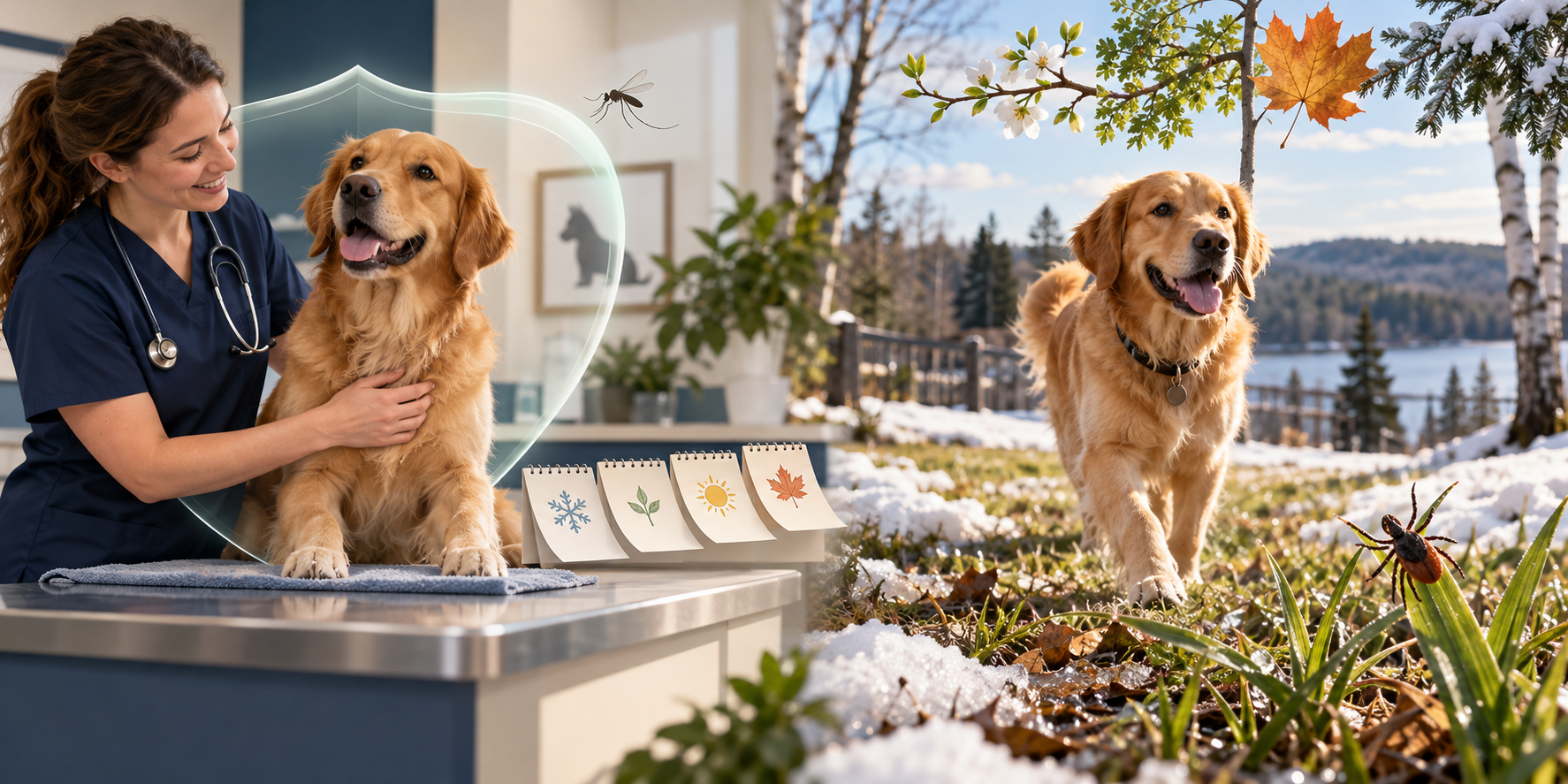
Give prevention year-round and test for both heartworms and tick-borne diseases every year.
Preventives are excellent—but nothing is 100%. A dose can be late, spit out, vomited up, or not absorbed properly. Dogs usually have no early signs of heartworm disease, so annual testing confirms that the prevention plan is working and helps us catch infection before even more damage is done.
The monthly heartworm preventives we carry also treat and control common roundworms and hookworms—helpful because dogs make questionable choices about what counts as food and where their mouths belong.
Eligible preventives purchased through us, given on schedule, and paired with the required testing may also be backed by the manufacturer’s guarantee. Ask us about eligibility details.
Not every day of the year—but every month of the year. Blacklegged ticks can become active whenever temperatures climb above roughly 40–45°F, even in the arctic hellhole that is Wisconsin in February. Those cold-weather ticks can transmit Lyme disease, so one random warm day is enough to create risk.
Fleas are an all-season problem and can arrive through contact with other dogs, wildlife, or places wildlife has visited.
For dogs, our preferred options are an effective chewable—we carry Bravecto here—or Bravecto Quantum, which we now carry. Bravecto Quantum is a veterinarian-administered injection for dogs and puppies at least six months old. One injection provides 12 months of flea protection and protection against most covered tick species; protection against lone star ticks lasts eight months.
Learn more about Bravecto Quantum, or ask us which option makes the most sense for your dog.
These are our general recommendations—not a substitute for examining the individual creature currently shedding on your furniture.